
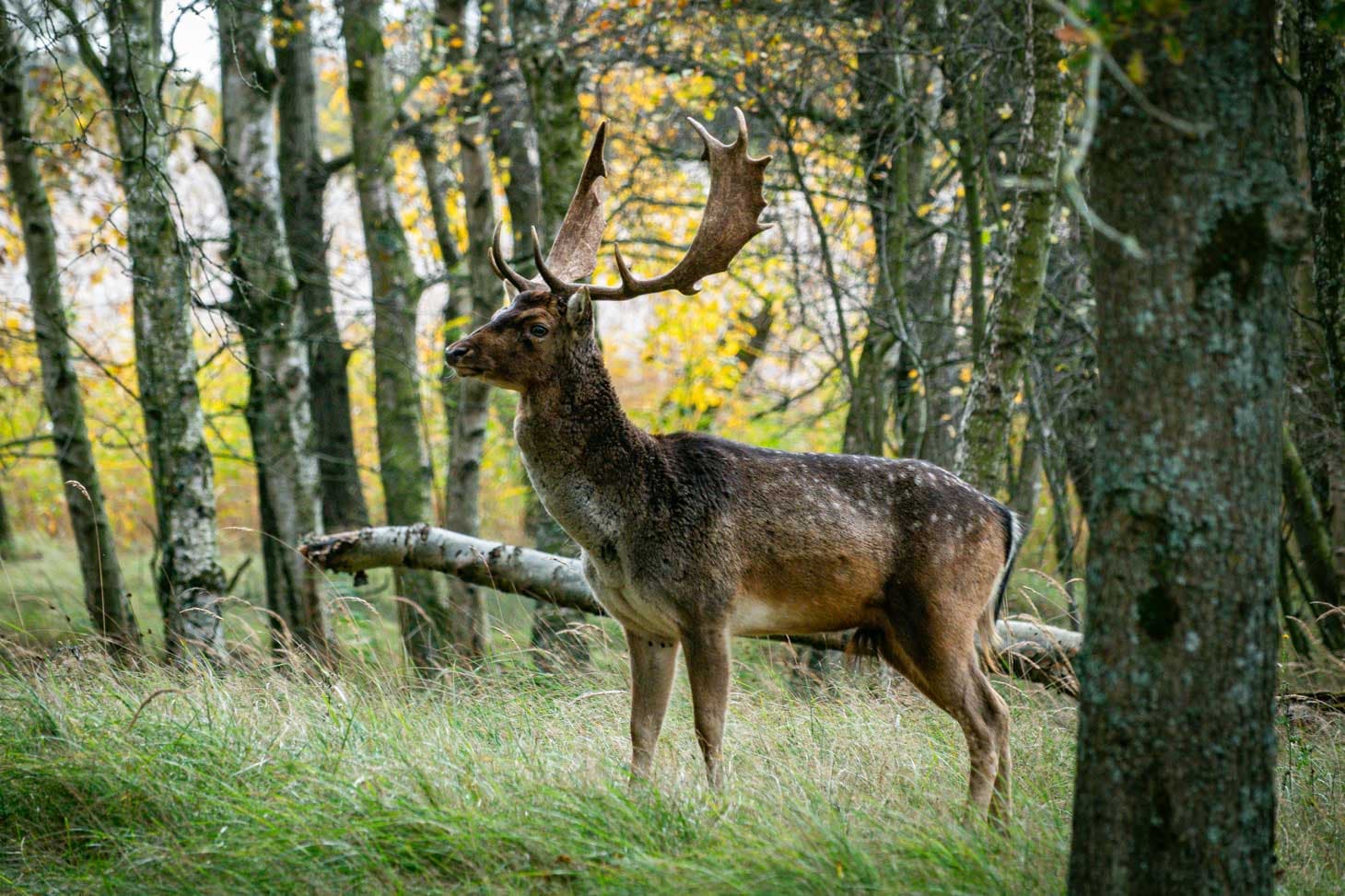
What is antler shedding?
Antler shedding is one of nature’s most fascinating events. Every year, between February and April, male red deer (Cervus elaphus) lose their antlers in a completely natural way. This biological process, driven by hormonal changes linked to day length, allows the animals to grow a fresh set of antlers year after year.
In Spain, the shedding season offers a unique opportunity to collect deer antler sustainably — an exceptional-quality raw material used to make natural chew toys for dogs.
The natural antler cycle
Deer antlers are the fastest-growing bone structures in the animal kingdom. The full cycle takes roughly one year:
- February – April: The antlers are cast (antler shedding). Testosterone levels drop and the pedicle bone is reabsorbed, so the antlers come away.
- April – August: The new antlers grow, covered in a velvety skin rich in blood vessels known as “velvet”.
- August – September: The antlers fully harden into bone. The velvet dries out and the deer rubs it off against trees and shrubs.
- September – February: The rut and courtship season. The antlers serve their purpose in the competition between males.
Sustainable collection
Our antlers are of Spanish origin. During the shedding season, authorised collectors gather them on foot, respecting natural habitats and without disturbing wildlife in any way.
Every antler collected is inspected, cleaned and graded by size, thickness and condition. Only antlers in the best condition move on to production, where they are turned into top-quality natural chew toys.
Why naturally shed antlers?
- 100% ethical: No animal is killed or disturbed
- Sustainable: A renewable natural resource is put to good use
- Superior quality: Naturally shed antlers have an ideal density
From shed antler to chew toy
Once collected, the antlers are cleaned naturally, without chemicals. They are then cut into different sizes and formats (whole or split) to suit dogs of every breed and size.
The result is a 100% natural, long-lasting chew toy that gives dogs hours of entertainment — always under their owner’s supervision — while showing the utmost respect for the environment and wildlife.